


Highlights:
- Single big very ancient tree with thick trunk
- Elegant, excellent flavour density and durability
- Immediately melts away bitterness
- Wild orchid aroma
- Estimated tree age 800yrs
Having grown in a remote location in Pasha, trees in XiNiuTang (translated as “Rhinoceros pond” in English) have fortunately never been cut and as a result the tea is dense and very long lasting
Our single ancient trees are harvested and made in a small production with strict supervision, therefore the quality and authenticity are ensured. It tastes refined and elegant while keeping the archetypal bitterness of Menghai tea, which melts away quickly. These characteristics make XiNiuTang perfect to enjoy now as well as suitable for ageing. The wild orchid note attributes to the fact that trees being surrounded by rocks that contains ample mineral.
If you like a “sweet type” of LBZ (as opposed to “bitter type”), you will like this tea.
How old are these trees?
All tree ages are approximations, and one should always doubt when an age is given as a single number. There are no certain scientific methods to identify the age of a tea tree. The only possible way to tell how old (and healthy) a certain tree is is by drinking its leaves and comparing it to its neighbours: the older the tree is, the thicker the soup and the more comfortable the ChaQi and your body in general.
The consensus among the most reliable tea experts about the age of the oldest standard puerh varietal trees in Menghai area is approx. 800 years. However people, even experts, have very different opinions about what age of tree is in a specific area.
So there always is uncertainty in this topic and we won’t pretend otherwise, we simply say: If you or your favourite expert think there are 800+ years old in Menghai, this is one such tree. This is type 1 gushu, the best category of ancient tree available in the area. Best largely means oldest, but healthiest/biggest is also very important.
You can find more details about reference tree ages on the Benchmark ancient tree introduction under “Age of trees”.

Puerh.uk Benchmark Ancient Tree Series Introduction
- The best possible ancient tree tea that can be obtained in a given specific garden
- Our most significant contribution to making available a type of puerh that was not available before
- Super strict quality criteria (standard puerh varietal only, classic puerh areas only, 1st spring pick, extremely clean environment, ancient trees that have never been cut, healthiest and biggest trees only chosen for single trees production)
The best tea is not for sale, it’s available only through relationships. Tier 5 is about 0.01% of available Puerh, with ancient tree leaves only with all taste qualities present in overwhelming amount, tea that is basically only found in elite asian circles and via private connections.
Benchmark ancient tree Puerh is a subset of Tier 5, and particularly means: this is highest expression of ancient tree puerh from a specific garden, so it can be used as “benchmark” to tell whether other puerh is truly ancient tree or not.
Puerh of this quality has never been made before in history (only in the last 10 years), this is the most exciting frontier of tea at the moment as far as we’re concerned. Please see the full Benchmark ancient tree introduction page for more info.
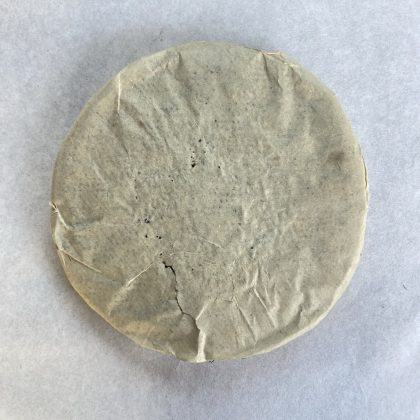
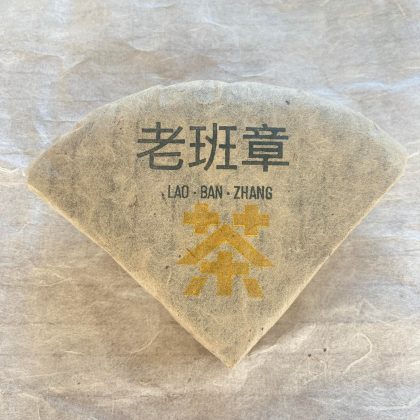
30g ceramic jars (a bit more than 1oz), 200g cakes.

Tim P –
A new joint favourite, with the Tian Men Shan, amongst the 2025 “great teas” benchmark tea collection (with a couple still due to be retasted before I write a note), though very different from the TMS and the other teas in the set from the greater Yiwu area with Menghai power to sustain it through long ageing. Sustained by plenty of bitterness, yet also very good sweetness, sustained over a considerable number of infusions. Also a striking feeling in the body, leaving a feeling of openness in the chest after a few steeps.