


Highlights:
- 1 single extra tall (gaogan) ancient tree
- North Laos, with higher quality than most Yiwu
- Maximum tree estimated age: 500 years (see below “How old are these trees?” for more info)
- Serious aftertaste, noticeable even down in the throat
- Meditative Peaceful Qi
- Floral-honey sweet aromas in a gorgeous pale-yellow liquor
From a secret wild region in Chuankuang, Laos the environment is pristine and trees have been rarely picked, amazing quality that would cost twice as much if it was in Yunnan. The soft-silky smoothness, combined with the great balance of sweet and low astringency make this tea the single best puerh with a noticeably Laos-influenced terroir we ever had. Differently from Beyond Yiwu and Laos BoHeTang (which are very much Yiwu teas), this tea has slightly different aromatics and Yun a bit more typical of Laos.
You can really feel the purity of the extra tall single tree here. The Qi and depth are perfect for a focused session.
How old are these trees?
All tree ages are approximations, and one should always doubt when an age is given as a single number. There are no certain scientific methods to identify the age of a tea tree. The only possible way to tell how old (and healthy) a certain tree is is by drinking its leaves and comparing it to its neighbours: the older the tree is, the thicker the soup and the more comfortable the ChaQi and your body in general.
The consensus among the most reliable tea experts about the age of the oldest standard puerh varietal trees in Yiwu/6 Famous mountains tea area is approx. 500-800 years. However people, even experts, have very different opinions about what age of tree is in a specific area.
So there always is uncertainty in this topic and we won’t pretend otherwise, we simply say: If you or your favourite expert think there are 500+ years old in Yiwu (including bordering areas in Laos), this is one such tree. What we can say for sure is that this is type 1 gushu, the best category of ancient tree available in the area. Best largely means oldest, but healthiest/biggest is also very important.
You can find more details about reference tree ages on the Benchmark ancient tree introduction under “Age of trees”.
Puerh.uk Benchmark Ancient Tree Series Introduction
- The best possible ancient tree tea that can be obtained in a given specific garden
- Our most significant contribution to making available a type of puerh that was not available before
- Super strict quality criteria (standard puerh varietal only, classic puerh areas only, 1st spring pick, extremely clean environment, ancient trees that have never been cut, healthiest and biggest trees only chosen for single trees production)
The best tea is not for sale, it’s available only through relationships. Tier 5 is about 0.01% of available Puerh, with ancient tree leaves only with all taste qualities present in overwhelming amount, tea that is basically only found in elite asian circles and via private connections.
Benchmark ancient tree Puerh is a subset of Tier 5, and particularly means: this is highest expression of ancient tree puerh from a specific garden, so it can be used as “benchmark” to tell whether other puerh is truly ancient tree or not.
Puerh of this quality has never been made before in history (only in the last 10 years), this is the most exciting frontier of tea at the moment as far as we’re concerned. Please see the full Benchmark ancient tree introduction page for more info.
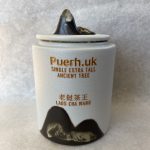
30g ceramic jars (a bit more than 1oz), 200g cakes.


Tim P –
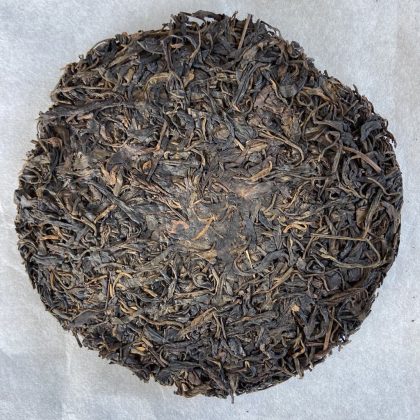
Tasted alongside its 2024 equivalent, using a 5g sample from a disappointingly underweight (only 175g in total) cake. (“Weight loss due to ageing”?! Harrumph.) Significantly different style, with bitterness much stronger early in the session, though it became sweeter after the sixth infusion. Will be interesting to taste it in a year’s time to see how it compares to how the 2024 is now. Score 18-18.5/20.
Tim P –
Initially overshadowed by its 2024 equivalent, another six months has filled this tea out further – showing how quickly these teas can develop with even a little age. Some extra thickness and sweetness as I retaste, a comfortable and steady qi, and good durability through more than a dozen infusions. Will be interesting to follow over the years.